Confirmed Speakers
Joanmarie Del Vecchio
William & Mary
Assistant Professor of Geology
Joanmarie Del Vecchio is a geomorphologist who uses field observations and remotely sensed data from satellites and drones to study how landscapes respond to a changing climate. Her work spans permafrost landscapes, surface processes, and computational and "big data" approaches to Earth science, including models for identifying Arctic landforms and studies of how permafrost thaw shapes rivers, erosion, and vegetation.
WebsiteCarla P. Gomes
Cornell University
Ronald C. and Antonia V. Nielsen Professor of Computing and Information Science
Carla Gomes directs the Institute for Computational Sustainability and co-directs the Cornell University AI for Science Institute. Her research combines constraint reasoning, optimization, and machine learning for large-scale combinatorial problems, with a focus on computational methods for environmental, economic, and societal challenges. She is a Fellow of AAAI and a Schmidt AI2050 Senior Fellow.
WebsiteStéphane Hallegatte
World Bank Group
Chief Economic Adviser, Climate
Stéphane Hallegatte is Chief Economic Adviser for Climate at the World Bank Group, which he joined in 2012 after a decade of research in environmental economics and climate science at Météo-France, CIRED, and Stanford University. His work focuses on the economics of resilient, low-emission development, natural disasters and risk management, and how climate policies affect jobs, incomes, and poverty. He was a lead author of the IPCC Fifth Assessment Report and has led World Bank reports on green growth, decarbonization, and climate resilience.
Website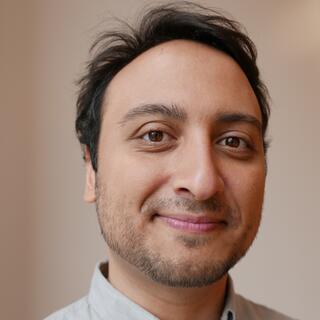
Luis E. Ortiz
George Mason University
Assistant Professor, Atmospheric, Oceanic, and Earth Sciences
Luis Ortiz is co-Director of the Virginia Climate Center at George Mason and Acting State Climatologist for Virginia. He studies how cities interact with the atmosphere in a changing climate, and how those interactions affect people and infrastructure. His work uses high-resolution dynamical and statistical modeling of urban weather and climate to analyze impacts ranging from energy demand to exposure to weather extremes.
WebsiteBiplav Srivastava
University of South Carolina
Professor of Computer Science, AI Institute
Talk Some Lessons from Smart Transportation to Help Plan for a Better Planet
Biplav Srivastava's research aims to help people make rational decisions despite poor data, changing goals, and limited resources, with work spanning neuro-symbolic planning, trusted AI, and sensor and open-data applications for smarter communities in areas such as water, energy, and transportation. He is an ACM Distinguished Scientist, an AAAI Senior Member, and an IEEE Senior Member.
Stephen Wissow
University of New Hampshire
Doctoral Candidate, Computer Science
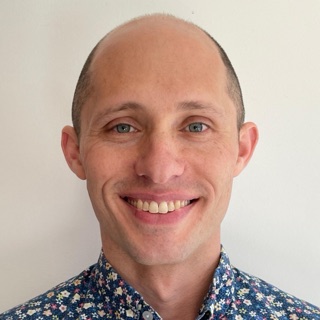
Stephen Wissow is a PhD candidate in Computer Science at the University of New Hampshire, collaborates with the MIT-IBM Watson AI Lab, and will give an introduction to AI planning for researchers across disciplines. Their research develops heuristic search algorithms for automated planning under resource constraints, focusing on how cost models influence planning speed and on balancing exploration and exploitation, the latter recognized with an Outstanding Paper Award at ECAI 2024. They are interested in the problem setting posed by renewable-heavy power grids, where energy availability fluctuates and long-running algorithms must reconcile partial plans with accrued world changes.
Website